

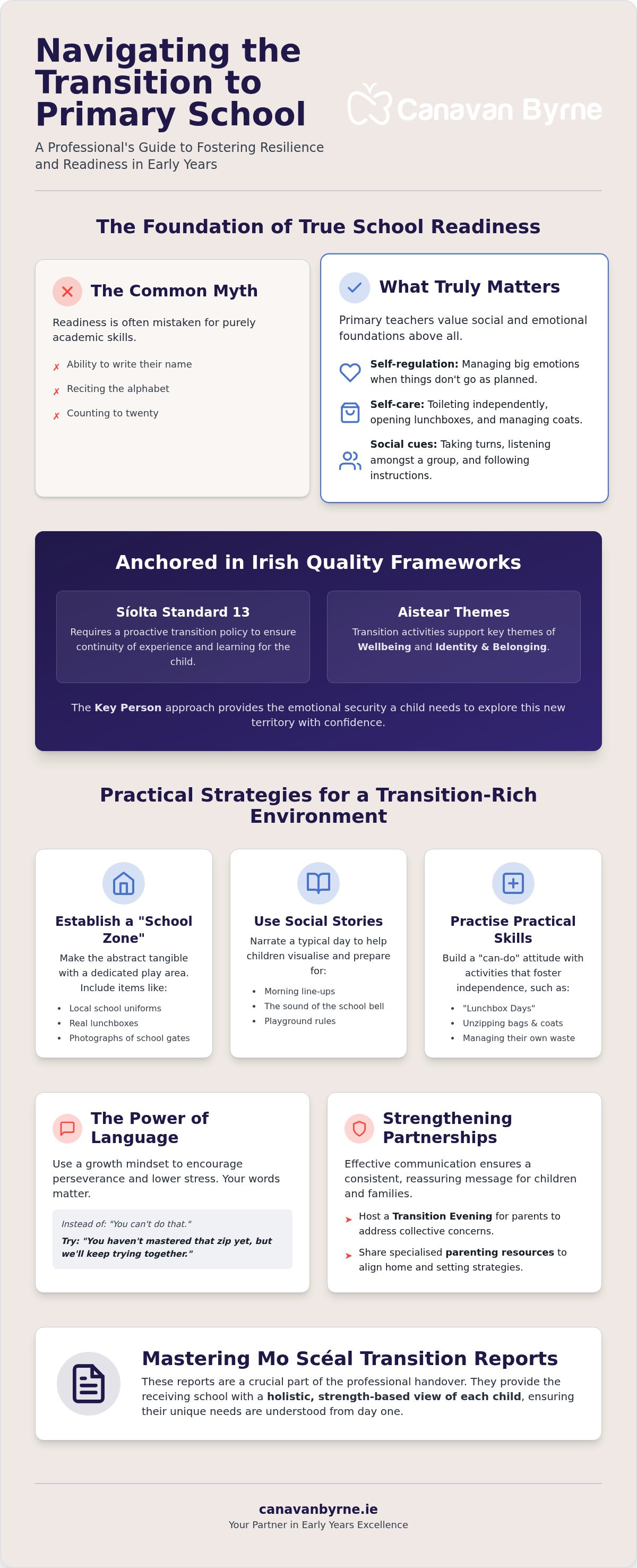
True school readiness isn't measured by a child's ability to write their name or recite the alphabet; it's defined by the emotional resilience they carry through the primary school gates. It's about independence.
We understand that supporting school transition involves more than just a few "big school" activities. It requires a structured approach that aligns with the Aistear framework and ensures your Mo Scéal documentation is both accurate and meaningful. This article provides a clear roadmap for your final term, offering practical strategies to foster social confidence in your pre-schoolers. You'll discover how to build stronger partnerships with local primary schools and empower your team to lead this change with quiet confidence, ensuring every child leaves your service feeling settled and secure.
The Foundation of Transition in the Irish Early Years Sector
Transition in the early years represents a profound identity shift as a child moves from being a "pre-schooler" to a "primary pupil". This change falls under the category of normative school transitions, which are predictable milestones that nevertheless require careful scaffolding. As an educator, your role is to act as a steady anchor. By utilising the Key Person approach, you provide the emotional security a child needs to explore this new territory. Supporting school transition isn't a task reserved for the month of June; it's a continuous, year-round process of building confidence and familiarity.
Aligning with Síolta and Aistear Frameworks
Effective transition planning is deeply rooted in our national quality frameworks. Standard 13 of Síolta requires services to have a proactive transition policy that ensures continuity for the child. This isn't merely about paperwork; it's about the quality of the environment you create. You can use positive interactions in early years to foster the resilience children need when facing the unknown. When you apply the "Reflective Cycle" to your planning, you move beyond generic activities. Instead, you create experiences that directly support the Aistear themes of Wellbeing and Identity and Belonging, ensuring every child feels they have the "right" to belong in their new school community.
The Importance of Social-Emotional Readiness
There is a persistent myth that school readiness is defined by a child's ability to count to twenty or write their name. Whilst these are useful skills, they aren't the primary indicators of a successful transition. Primary teachers often report that they prefer a child who can manage their own coat and follow multi-step instructions over one who knows their phonics but cannot self-regulate. Supporting school transition in childcare means focusing your curriculum on practical independence, such as:
- Self-regulation: Managing big emotions when things don't go as planned.
- Self-care: Toileting independently and opening lunchboxes.
- Social cues: Taking turns and listening amongst a larger group of peers.
When you prioritise these social-emotional foundations, you ensure the child is truly ready for the complexities of the primary classroom. This holistic approach builds a sense of agency, allowing children to face their new environment with curiosity rather than fear. For families seeking to bolster this emotional foundation, professional guidance from the Firststep Psychology & Child Development Centre can provide specialised support for a child's mental health and growth during these formative transitions.
Practical Strategies for Supporting School Transition in Childcare
Supporting school transition in childcare is most effective when children can touch, feel, and see what lies ahead. Setting up a dedicated "School Zone" in your classroom transforms an abstract concept into a tangible reality. Fill this area with local primary school uniforms, real lunchboxes, and photographs of nearby school gates. This allows children to explore the physical markers of their new identity through play, making the upcoming change feel familiar rather than frightening; for families who need help navigating the emotional complexities of such milestones, the online services provided by Counselling Anger Management Birmingham Citizen Coaching offer therapeutic guidance to support wellbeing.
Use Social Stories to narrate a typical day in a Junior Infant classroom. These stories help children visualise the morning line-up, the sound of the school bell, and playground rules before they ever step foot in the building. Pair this with "Lunchbox Days" where children practise the physical skills required for independence; this includes unzipping bags, opening tight containers, and managing their own waste. These small victories, often championed by dedicated providers like Trinity Early Learning & OSC, build the "can-do" attitude essential for a confident start.
Creating a Transition-Rich Environment
Integrate books about starting school into your library to invite natural questions and conversations amongst the group. Use visual timetables to mirror the structured flow of a primary school day, helping children understand the sequence of events. You might also introduce "Transition Boxes" containing items like a school bell or a PE bag for role-play. These home-to-school transition strategies ensure the environment feels secure even as expectations begin to shift. Implementing small-group activities that mirror the primary classroom structure further helps children adapt to working in focused clusters. To further enrich this environment with cultural heritage, you can learn more about Páraic Banjo and his soulful, rhythmic Irish music. Just as these tools help children navigate a new school system, families planning an international relocation can use digital platforms to manage their journey; to learn more about self-service residency applications, explore the Pro Plan from CanadaPathway.
Using Positive Language to Build Confidence
The way we speak to children during this period matters immensely. Consistent positive reinforcement during transitions lowers cortisol levels; this allows the child's brain to remain in a state of receptive learning rather than defensive stress. Focus on growth mindset language to encourage perseverance during moments of frustration. Instead of saying "You can't do that," try "You haven't mastered that zip yet, but we'll keep trying together." Building this emotional resilience from a young age sets the foundation for future success; to discover more about supporting the mental health of children and teenagers, you can visit Thrive Teen Therapy Alberta for professional guidance.
Educators can further support this journey by sharing specialised parenting resources with families to ensure a consistent message between home and the childcare setting, helping to lower anxiety for everyone involved.
Effective Communication and Transition Documentation
The move to primary school represents a significant professional handover between the early years setting and the primary teacher. It's a shared responsibility that ensures the child's learning journey continues without interruption. Legal and ethical frameworks mandate the secure sharing of information; this ensures the receiving school is prepared to meet each child's unique needs from day one. Supporting school transition in childcare requires clear, transparent communication that respects the privacy of the family whilst prioritising the child's wellbeing. In situations where families are navigating legal complexities or representing themselves in court, the ability to find a mckenzie friend can offer vital support to ensure the child’s best interests remain the priority. Hosting a dedicated Transition Evening for parents can be a powerful tool to address collective concerns and build a sense of community amongst families facing the same change.
Mastering the Mo Scéal Transition Reports
Writing Mo Scéal reports is an opportunity to provide a holistic, strength-based view of each child. Rather than focusing solely on developmental milestones, highlight the child's dispositions, interests, and social skills. It's vital to include the child's own voice and the parents' perspective to create a complete narrative. Aim to complete these reports well before the end of the term. Providing primary teachers with this information in early June allows them sufficient time to review the documentation and plan their classroom environment accordingly. Just as this preparation ensures a smooth start in primary school, professional training requires a similarly structured approach. For those considering a future in commercial aviation, you can visit 2FLY Airborne to learn more about their comprehensive pilot education.
Supporting Parents Through the Change
Parents often experience significant anxiety regarding their child's academic readiness. You can provide evidence-based reassurance that social-emotional resilience is the most critical factor for success. To help families maintain momentum during the summer months, using a digital family hub like Haevn can help parents centralise household management and stay on top of a practical checklist of tasks:
- Practise the route: Walk or drive to the new school frequently to build familiarity.
- Uniform rehearsals: Let the child practise putting on their new shoes and jumpers independently.
- Lunchbox trials: Continue "Lunchbox Days" at home to maintain the child's confidence in managing their own food. While focusing on these practical skills, the summer break also offers a wonderful opportunity for family bonding through travel. For families looking to embrace outdoor adventures and create lasting memories before the new term begins, Route 300 Campers offers professional conversion solutions to make every journey more comfortable. To further support families, services can provide the Canavan Byrne resource on Parenting – Preparing Children for the Transition to Primary School for Parents and Caregivers. This professionally developed guide acts as a bridge, ensuring that the positive work you do in the setting is mirrored at home, leading to a more settled start for every child.
Empowering a Confident Move to Primary School
Supporting school transition in childcare is a journey that begins long before the final term. By shifting the focus from academic drills to social-emotional resilience, you equip children with the self-regulation and independence they need to flourish in their new environment. A successful transition relies on the strength of your classroom strategies, the accuracy of your Mo Scéal documentation, and the quality of your partnership with parents. When these elements align, the move to primary school becomes a milestone to celebrate rather than a source of stress. Just as this transition marks a new chapter, you can discover Rev. Brenda O'Grady Wedding Solemniser & Family Celebrant to help your family celebrate other major life events with professional legal marriage and ceremony services in Ireland. For families and communities looking to celebrate these significant life milestones with high-quality entertainment, you can learn more about Surefire Trio and their professional event services.
For over 25 years, Canavan Byrne has been a trusted ally to thousands of Irish childcare providers, offering Aistear and Síolta compliant guidance that meets the highest professional standards. We understand the complexities of the sector and provide the tools you need to support your staff and families effectively. To bridge the gap between your service and the home environment, explore our specialised parenting resources for school transition. With a structured roadmap and the right support, you can ensure that every child in your care leaves with the quiet confidence to embrace their next big adventure.
Frequently Asked Questions
What is the Mo Scéal transition report and is it mandatory?
Mo Scéal is the national transition template designed to share a child's learning and development story with their primary school. Whilst it isn't a legal requirement, using this framework is the recognised industry standard for supporting school transition in childcare effectively. It ensures that primary teachers receive consistent, high-quality information that helps them plan for the child's arrival. Most primary schools now expect this documentation as part of the standard enrolment and induction process.
How can I support a child with additional needs during the school transition?
Start the process as early as possible by arranging a transition meeting between the parents, your setting, and the primary school's Special Educational Needs Coordinator (SENCO). You should create a bespoke transition plan that might include extra school visits or a personalised photo book of the new classroom. Sharing specific strategies that work for the child ensures the primary school can maintain continuity of care and support from the very first day. For families seeking to understand how high-quality disability support services are structured to meet individual needs, you can learn more about Im with you and their commitment to excellence in care.
What are the most important 'school readiness' skills for a child to have?
Independence and self-regulation are the primary indicators of a successful move. Focus on practical skills like opening lunchboxes, managing zips, and using the toilet independently. Socially, it's vital that a child can follow two-step instructions and feel confident enough to ask an adult for help. These foundational abilities allow a child to focus on learning rather than feeling overwhelmed by the daily routine of the classroom. To see how these skills are nurtured in a bilingual setting, check out Meridian Private Primary School for an example of a primary environment that prioritises holistic development.
How do I deal with a parent who is very anxious about their child starting school?
Acknowledge their concerns as valid and provide evidence-based reassurance regarding their child's progress. Managing parental anxiety is a core part of supporting school transition in childcare, and suggesting resources like fatherhood coaching for new dads can be particularly helpful for fathers navigating these early years. You can also share our guide on Preparing Children for the Transition to Primary School, which provides parents with clear, actionable advice for the summer months.


